7 Things a 14,782 Hour Solo Brings to Official Rust
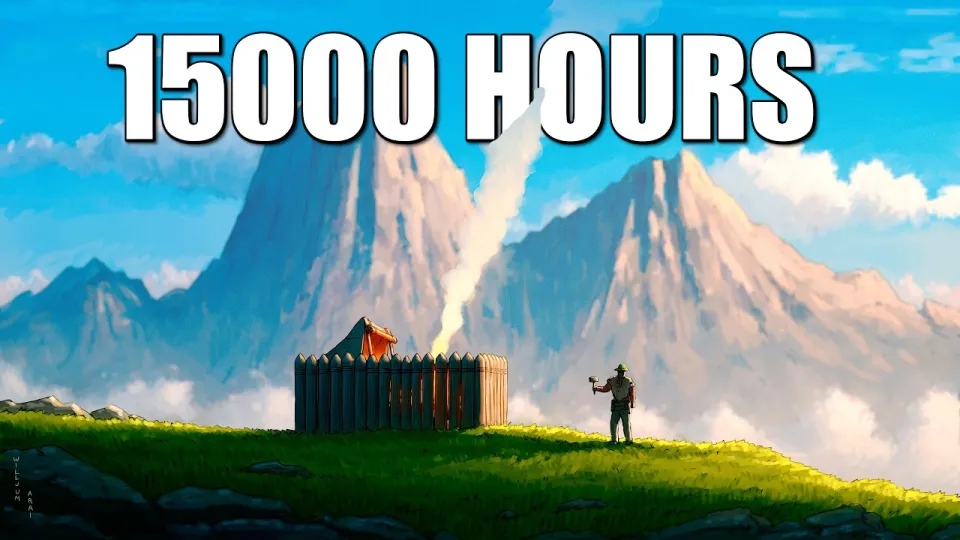
Video: How a solo with 14,782 Hours plays official rust...
Want articles like this for your own video to promote it on YouTube and Google? Order them through the Telegram bot @sat_sit_bot. The bot writes and publishes the articles itself (with your YouTube video embedded) on popular topical websites (no ads). Try it free: 50 articles on us.
· based on the channel Willjum
Key takeaways
- Willjum's official-server solo run is framed around 14,782 hours of Rust playtime, roughly 1,180 hours per year since early access in 2013.
- The base in the video was built by Luca Builds and became a decoy tool, with a mannequin placed in the window to draw fire.
- The run leans on a farmer-and-trader loop: scrap goes to tools and blueprints first, weapons are crafted only when a fight is already committed.
- Willjum hosts his own servers and a Survival Island, listed in the video description alongside Patreon and Twitch links.
- The video was published on June 7, 2026, and is sponsored by MANSCAPED with code WILLJUM15.
A 14,782-hour Rust solo on official servers is not a flex, it is a routine: the hours work out to roughly 1,180 per year since the game hit early access in 2013, and the video built around that number shows what the routine actually looks like. The short answer is that a solo with that much time does not play faster than everyone else — they play in a fixed order, spend scrap on tools before weapons, build a base that is meant to be shot at, and treat every fight as optional until it is not. The run is also sponsored, and the MANSCAPED Father's Day offer page is where the discount code from the video applies.
What 14,782 hours of Rust actually buys a solo
The number matters less as a brag and more as a schedule. Split across the years since Rust entered early access, 14,782 hours is close to a part-time job sustained for over a decade, and the visible result is not mechanical skill alone but the absence of wasted steps. A high-hour solo does not wander the map looking for content; they open with a plan for the first hour, a plan for the first night, and a plan for the first raid they expect to survive.
That shows up in small habits. Loot is sorted on the way home rather than at the base. The recycler trip is timed around a wipe-day crowd rather than against it. Blueprints are chosen for what unlocks the next tier of play, not for what looks fun. None of this is secret knowledge — it is the same advice every Rust guide gives — but a player with this many hours executes it without thinking, which is why the run reads as calm rather than frantic.
Base placement and the candle-hat problem
The base in this run came from a builder credited in the video, Luca Builds, and it is used as a tool rather than a trophy. The most quoted detail from viewers is the candle hat: the player announces it so the build can be seen in the dark, then never wears it again. The lesson is that a solo base is a decoy as much as a home. A mannequin placed in a window drew fire in the footage, and that is the point — anything that makes a raider shoot at the wrong thing buys time.
Practical rules a solo can take from the build:
- Put the loot room away from the side of the base that faces the most traffic.
- Keep one visible, cheap-looking target — a window, a doorway, a mannequin — so attackers commit early.
- Build for the wipe you are in, not the wipe you hope to reach; extra honeycomb is wasted if you never fill it.
- Never carry the only set of tools you own when you leave the base.
Scrap economy: why the farmer keeps crafting nail guns
The recurring joke in the comments is that the self-described peaceful farmer says he does not spend scrap on weapons and then crafts his 28th nail gun of the wipe. The underlying economy is real: scrap is the bottleneck, and a solo who spends it on guns early has no workbench, no blueprints and no backup kit. Tools, a workbench and a small stock of components come first; weapons are crafted when a fight is already committed, not carried around as insurance.
On official vanilla rates, that means a first hour of farming nodes and barrels, a recycler run for metal fragments and scrap, and a workbench placed before any serious PvP. Traders convert surplus into the things a solo cannot farm alone, and the safe zone is also where a solo learns who else is on the server. The discipline is boring, which is exactly why it works.
PvP timing: when a solo should and should not fight
A solo on an official server is always outnumbered, so the fight is chosen, not accepted. The pattern in high-hour solo play is to let groups pass, to fight only when the opponent is already hurt or carrying loot home, and to break contact the moment a second enemy appears. Viewers push back on this — the calm narration hides the fact that jumping two players at once is not something a new player should copy.
Three conditions worth respecting before engaging:
- You have a kit you can lose without ending the wipe.
- The enemy is between you and your base, not between you and the map edge.
- You know where the nearest safe zone or cover is if the fight turns.
The other side of the coin is sound. A player who can hear a footstep across a field can still miss a bear standing behind them, and animals remain one of the most common deaths for solos who stop paying attention while listening for players.
Typical questions from viewers of the run
Most of the doubt in the comments is about whether this style of play is transferable. It is, with caveats. The narrator's claim that no crazy PvP skill is required undersells the map knowledge behind every decision — knowing which monument is busy at what time, which side of the base raiders approach from, and when a group is likely to rotate. That knowledge is what the hours bought, and it can be learned deliberately rather than absorbed over a decade.
The second common doubt is about the hours themselves: is 14,782 even plausible? Yes, if the account dates back to early access and the game was left running while idle, which inflates playtime for many long-term players. The number is a rough proxy for experience, not a certificate.
Links from the video
- MANSCAPED offer with the video's discount code: https://manscaped.com/willjum
- Willjum on Patreon: https://www.patreon.com/Willjum
- Willjum on Twitch: https://www.twitch.tv/willjum
- Willjum on Twitter: https://twitter.com/willjum1
- Creative Commons Attribution 4.0 license referenced for the music: http://creativecommons.org/licenses/by/4.0/
What to take from the run
A 14,782-hour solo on official Rust is a demonstration of order rather than speed: tools before guns, a base built to be shot at, fights accepted only on your terms. The candle hat and the window mannequin are the memorable images, but the transferable part is the sequence — farm, recycle, workbench, then play. The video breakdown is the work of the channel Willjum, who also runs his own servers and a Survival Island for players who want a calmer version of the same loop. If the sponsored segment is what brought you here, the MANSCAPED page for the video offer is the place to use the code before it expires.
Questions & answers
Is 14,782 hours of Rust actually possible?
Yes. Rust has been playable since 2013, so the total works out to roughly 1,180 hours per year across more than a decade. Long-term players also accumulate idle hours when the game is left running, so the figure is an upper estimate of real playtime rather than a precise measure.
Can a new player copy this solo style on an official server?
The routine is copyable, the judgment is not. Farm first, recycle early, place a workbench before crafting weapons and avoid fights you did not choose. What takes time is map knowledge — which monuments are busy and when — and that is what the hours in the video represent.
Why does the base use a mannequin in the window?
It is a decoy. Anything visible that looks like a player draws fire and makes raiders commit resources to the wrong side of the base. The same logic applies to a deliberately cheap-looking entrance while the loot stays elsewhere.
Do you need good PvP aim to survive as a solo?
Aim helps, but positioning and timing matter more. High-hour solos fight only when the opponent is already hurt or carrying loot, and they disengage as soon as a second enemy shows up. The narration in the video downplays skill, but the decisions behind each fight are the real advantage.
Source: How a solo with 14,782 Hours plays official rust... · Markdown version